
The final week is not the time to repair every gap. Children benefit more from short reviews, familiar question types and predictable routines than from a sudden increase in pressure. The aim is to arrive prepared enough to think clearly.
The priorities for the week
- Consolidate methods your child already understands.
- Review a small number of repeated mistakes.
- Keep sleep, meals, school and downtime as normal as possible.
- Check official assessment-centre information early.
- Protect confidence by avoiding score comparisons and predictions.
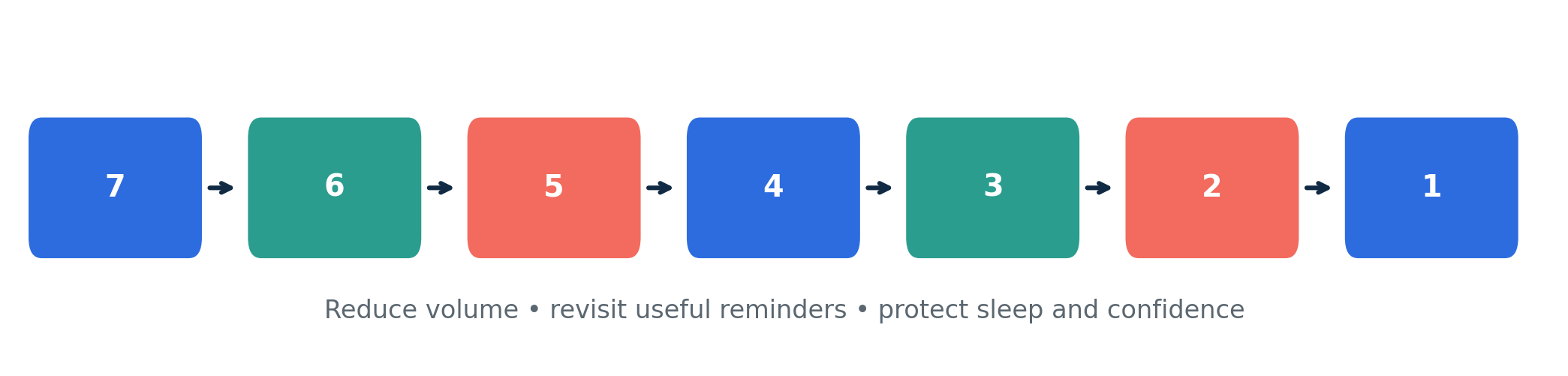
The seven-day plan
Seven days before
Complete the final substantial mixed practice session or timed section, if one is planned. Review it calmly and choose no more than three reminders for the week. Do not turn the result into a forecast of the final outcome.
Six days before
Revisit one Maths priority and one English priority using short questions. Ask your child to explain methods aloud. Stop once the explanation is secure rather than adding extra pages.
Five days before
Review question-reading habits: underline units, identify what a question is asking and find evidence for comprehension answers. This is a useful day for accuracy rather than speed.
Four days before
Use a short mixed session and revisit two earlier mistakes in a different format. If a topic remains very weak, reinforce the simplest reliable method instead of introducing several new shortcuts.
Keep final week practice structured and manageable
PrepPath can organise short SEAG-style sessions and explanations while parents follow progress through their account.
Three days before
Reduce the workload. Review familiar facts, vocabulary or one-page reminders. Check the Pupil Card, assessment centre, journey and any approved access arrangements. Solve practical uncertainties now.
Two days before
Choose a brief confidence-building activity or take a full rest day. Avoid a difficult timed paper. Keep the evening free for normal family life and aim for the usual bedtime.
The day before
Do not cram. Pack only what the current official instructions permit, prepare clothing, confirm travel and keep the evening ordinary. A short reminder of the child’s strategy is enough.
The assessment morning
Allow time for a familiar breakfast and an unhurried journey. Avoid last-minute questions.
“Read carefully, do what you can and move on if something is taking too long. We are proud of your preparation.”
What to stop doing in the final week
| Avoid | Why |
|---|---|
| Daily full papers | They can create fatigue without enough time to learn from mistakes. |
| Starting many new topics | New methods may displace reliable ones and increase uncertainty. |
| Comparing children or scores | The comparison adds pressure but does not improve the next answer. |
| Changing sleep dramatically | A familiar routine is usually easier to maintain than an artificial early night. |
| Discussing required school scores | Admissions outcomes are not controlled by one final-week conversation. |
| Unofficial test-day advice | The Pupil Card and current centre instructions take priority. |
If your child becomes anxious
Acknowledge the feeling without repeatedly reassuring or debating it. Try: “It makes sense to feel nervous about something important. Let’s focus on the next small thing we can control.” Then choose a practical step such as checking the route, taking a break or reviewing one familiar strategy.
A final week family agreement
- We will keep practice short.
- We will stop if concentration has gone.
- We will not compare results with other children.
- We will check official information rather than rumours.
- We will protect time for normal activities.
- We will praise effort and useful habits, not predict outcomes.
Practical assessment arrangements should be checked against the current Pupil Card, assessment-centre instructions and official guidance at the SEAG Assessment Guide. For more on the day itself, see our SEAG FAQs for Parents, and if the final stretch feels overwhelming, our guide on helping an anxious child prepare for SEAG covers that directly.
Give the final sessions a clear purpose
Create a PrepPath account for structured practice, explanations and a clear view of the areas already improving.
PrepPath is independent and is not affiliated with or endorsed by the Schools’ Entrance Assessment Group.